
Board of Directors Annual Elections —
Nominations and Committee Q & A
About the Board
Composed of 7 elected members, the Board of Directors takes administrative and creative initiative in providing direction on the activities and functioning of articule. This involves attending Board meetings, general assemblies, and staying informed of the centre's status on several levels: its programming and financial situations, its standing within the various collectives and groups it participates in, and its standing vis à vis funding organizations. As well, Board members sit on at least one of the centre’s committees, and attend openings, artist talks, and other articule activities based on their interests. The Board is delegated by the general membership to establish policies. It must, therefore, represent the interests of the general membership.
How to nominate a member
Active members of articule may be nominated as candidates for election. Four seats are up for election this year. To nominate a candidate, you must have paid your $1 membership fee (payment can be made in person or by sending $1 to administration@articule.org via Interac e-Transfer). You may also pay the membership fee before the General Assembly in order to vote. To view the list of active members who are eligible for nomination to the Board of Directors, please visit the members’ website. You will find the active members on this page. As per our bylaws, each articule committee was invited to submit at least one question, in writing, to the election candidates. The goal is to help articule members cast their votes at our Board of Directors elections on Saturday, June 13, 2026, from 2 - 4 PM. Candidates have the option of answering one question per committee.
Update: The nomination period is now closed!
Elections — How to vote
Voting will take place in person at articule, in person and online (via Zoom) during our Summer General Assembly on Saturday, June 13, 2025, from 2 - 4 PM. You must register in advance.
Advance voting: Advance voting is available, in person at articule, on Saturday, June 13, between noon and 2 PM. If you are interested in this option, please confirm your interest by contacting us here by June 6, 2026.
Our Candidates
-
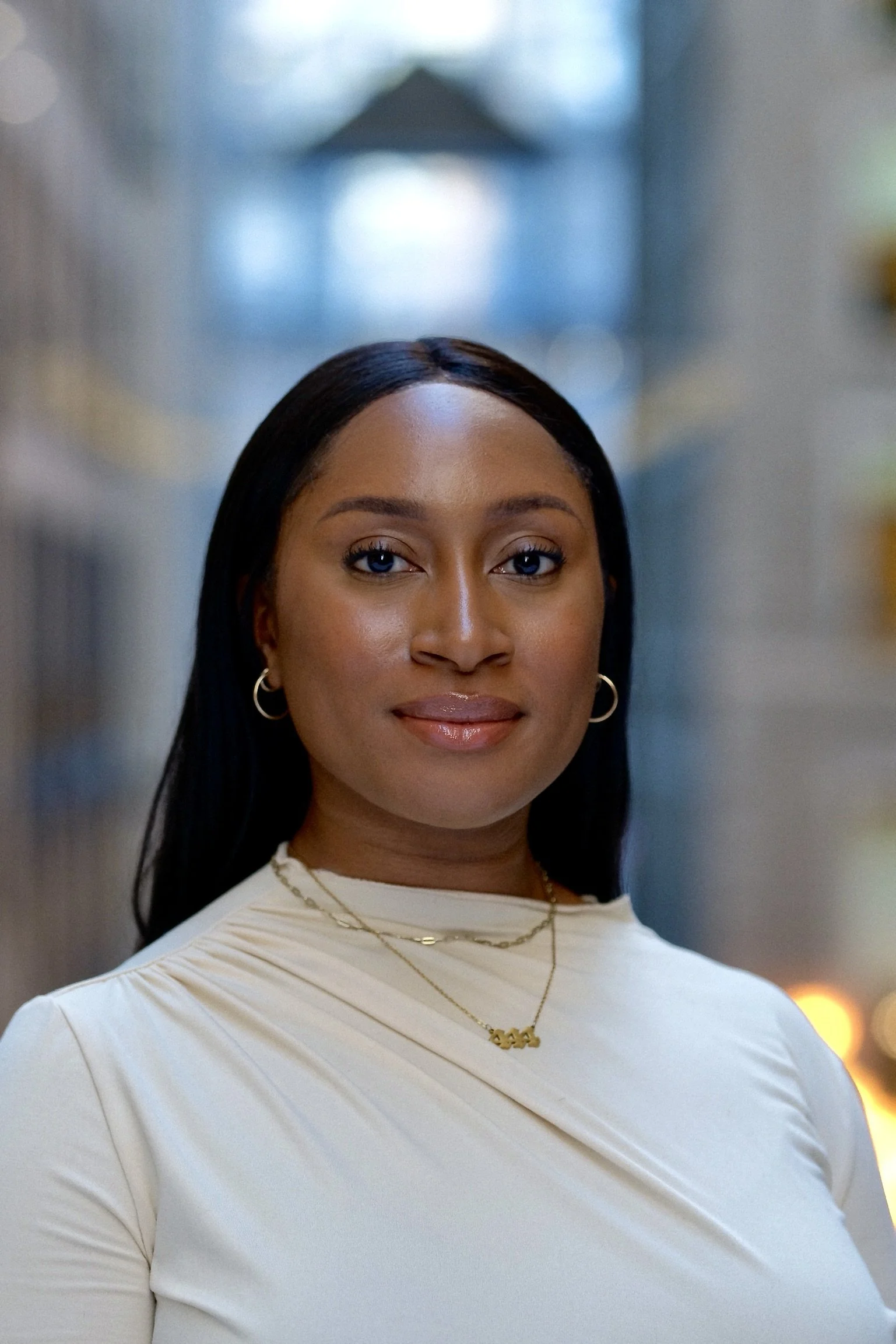
Micaela Devonish (she/her) is a Bajan-Canadian cultural strategist and curator based in Tiohtià:ke/Montréal. Her practice helps audiences connect emotionally, aesthetically, and experientially with Afro-Caribbean diasporic art through transcultural connections.
Micaela brings over seven years of public sector experience in strategic planning, governance, and program management, which she now applies to cultural institutions navigating organizational change. She holds a Bachelor of Commerce in Marketing from Carleton University and is pursuing a Graduate Certificate in Curatorial Studies at Concordia University.
As a member of the MMFA Young Philanthropists' Circle Committee and Co-Lead for the Black Wealth Club’s Culture Club, Micaela is committed to building sustainable conditions for Afro-Caribbean diasporic art and the artists who make it. She has served on articule's Board of Directors since July 2024 and as President since July 2025.
-
To me, anti-oppression is a commitment to learning and understanding forms of oppression that marginalized groups face, and challenging how they might show up in our own actions and beliefs, even unintentionally. It also means being willing to sit with difficult realizations, have difficult conversations or make difficult decisions.
The Board’s role is to set an example for the organization by unlearning and relearning, as well as embedding and practicing anti-oppressive principles in decision-making, and making sure that the organization has the knowledge, tools, and resources to prioritize marginalized voices.
-
I’ve always believed in challenging my own views, but being involved with articule has taught me how to translate the stories and perspectives shared by artists from marginalized communities into actual changes. That to me is inclusion. Inclusion isn’t just inviting diversity into the room, it’s making the room more accessible to members of marginalized communities so that their perspectives are integrated into decision-making, rather than being consulted on the side.
If re-elected to the Board of Directors, I would work to create more opportunities for marginalized communities to be heard, without tokenizing them or their experiences, or asking anyone to speak for their entire community. Through my own research and with input from those affected, I would be interested in looking at any policies, such as the election policy, or processes, like the call for submissions process, that need amending to amplify diverse marginalized voices.
-
As a Board member, I would first want to re-activate the Fundraising Committee. I would be willing to support the Treasurer and the Fundraising Committee in establishing clear guidelines around selecting funders and accepting funding. The guidelines would outline the values funders should align with, so the decision isn’t made on a case-by-case basis.
From there, I would support the Treasurer in building and maintaining funder relationships with a long-term view, starting with smaller asks, understanding each funder's desired level of involvement, and finding points of alignment that make the relationship genuine and reciprocal.
I would also advocate for using a grant search platform so the Committee has better visibility into funders’ history, to get a better understanding of what they have funded and if it aligns with articule.
-
I think that connecting all of articule’s committees starts with the Board. As a Board, there is a need to revisit shared norms and establish a shared vision for articule’s future. The 2025-26 Member’s Survey would help the Board get a better understanding of what articule’s members need from the organization, with input from the Staff to set realistic expectations on what the organization is capable of. With that understanding, I would like to activate committees in a more meaningful way, giving them specific goals tied directly to the Board’s strategic priorities. This is the first step to helping the organization move as a collective.
In my experience, committee members often have to make decisions without a full understanding of how those decisions might impact other areas of the organization. First, I would like to find a way to make those interdependencies visible. I think that a shared calendar or dashboard that’s accessible to all committees would also go a long way in helping committees understand what else is in motion. I also think that celebrating wins across committees, not just within them, would help enforce the culture of moving towards the same goals.
Micaela Devonish

-
fernando belote (FERN) is a queer, Brazilian, neurodivergent multidisciplinary artist whose practice explores the intersections of art and language. They studied Art History at McGill University, as well as Fine Arts Photography and Sculpture at Concordia University. Their work has been presented in several artist-run centres across Quebec, including DARE-DARE, Agregat, Écart, Le Lieu, and SKOL, among others.
In parallel, their performance practice has been growing within the local art scene, where they develop embodied activations of their work rooted in ritual, language, and presence.
Their current practice is oriented toward eco-responsible approaches, incorporating the reuse of ceramic materials and papermaking from plant species considered invasive in Canada. Through these processes, they develop a research-based practice grounded in questions of transformation, territory, and language.
-
My understanding of anti-oppression is rooted in the sharing of responsibilities within a community, so that the weight of labour—often invisible—does not fall on a small number of individuals. Oppression is multidimensional and operates through intersecting systems that affect people differently depending on their realities.
My personal experiences of marginalization, both in Brazil and in Canada, have shaped a sensitivity to the struggles and lived realities of others. I am aware of my positionality and the place from which I speak, and I have developed, through both my academic background and my embodied artistic practice, the tools necessary to build ethical, attentive, and responsible relationships.
In this context, I see the role of the board as actively supporting equitable structures, ensuring a fair distribution of responsibilities, and holding the organization accountable so that its practices truly reflect its anti-oppressive commitments, both in governance and in its programming.
-
I believe it is important to mention that my experiences of marginalization—related to domestic violence, neurodivergence and disability, homophobia, economic class, non-conforming male gender expression, as well as immigration and integration—have allowed me to develop tools to connect with the realities and struggles of others. These tools have been further refined through my engagement with decolonial theory and various trainings.
For me, inclusion means creating spaces where diverse perspectives—including those that challenge our own views—can be genuinely heard, acknowledged, and taken into consideration. It involves active listening, a willingness to question oneself, and a commitment to sharing decision-making power.
I believe we are shaped by overlapping systems of oppression, and that it is essential to include people with differing opinions. However, inclusion does not exclude critical thinking or accountability. It is important to remain open to critique while maintaining clear ethical frameworks.
As a member of articule’s Board of Directors, I would put this into practice by fostering safer spaces for dialogue, valuing constructive disagreement, and ensuring that decision-making processes actively include diverse voices, even when they challenge existing priorities.
-
6 hours divided twice per week.
-
In my view, a programming selection process that respects the Basis of Unity must be transparent, situated, and attentive to power dynamics. In this context, I believe that anonymous submissions should be avoided. As an artist-run centre committed to an anti-oppressive mandate, it is important to understand the standpoint from which an artist is speaking, in order to better contextualize proposals and support practices rooted in specific lived realities.
Regarding representativeness quotas, I believe they can play an important role. Marginalized communities often operate within different temporalities and logics, particularly due to the structural barriers they face within the art world. Quotas can therefore serve as a transitional tool to address systemic inequalities and promote more equitable access to programming opportunities.
More broadly, an anti-oppressive approach to programming involves rethinking selection criteria, valuing diverse forms of knowledge, and implementing processes that do not reproduce existing exclusions. This requires an ongoing commitment to critical reflection, active listening, and the adaptation of institutional practices.
-
I can drive a truck.
fernando belote (FERN)
-
I believe there are several strategies to involve artists in creative ways in building fundraising initiatives within our community. These approaches not only generate income, but also strengthen collective engagement and a sense of belonging around the organization.
I would be very interested in contributing to collective reflections and brainstorming sessions to develop creative and ethical fundraising strategies that align with articule’s values.
I have previously worked on this type of fundraising with Cecil JM Brack, and I recall several meaningful discussions from the fundraising committee that I was part of. These experiences would inform my contribution to developing sustainable and context-sensitive fundraising models.
-
I believe that informal moments of sharing, such as collective meals—especially around vegetarian food or in the form of potlucks—can be a very concrete way to strengthen connections between committees. Gathering around food not only nourishes the body, but also creates more human spaces where members, staff, and board members can engage beyond strictly formal frameworks.
Sharing food allows for extra time to connect, slow down, and build relationships of trust that can positively influence committee work. These moments can shift the way people relate to one another and foster a stronger sense of belonging to the collective.
In this sense, creating more of these informal spaces alongside formal meetings could help build stronger bridges between committees and support a more collective trajectory within articule.
-
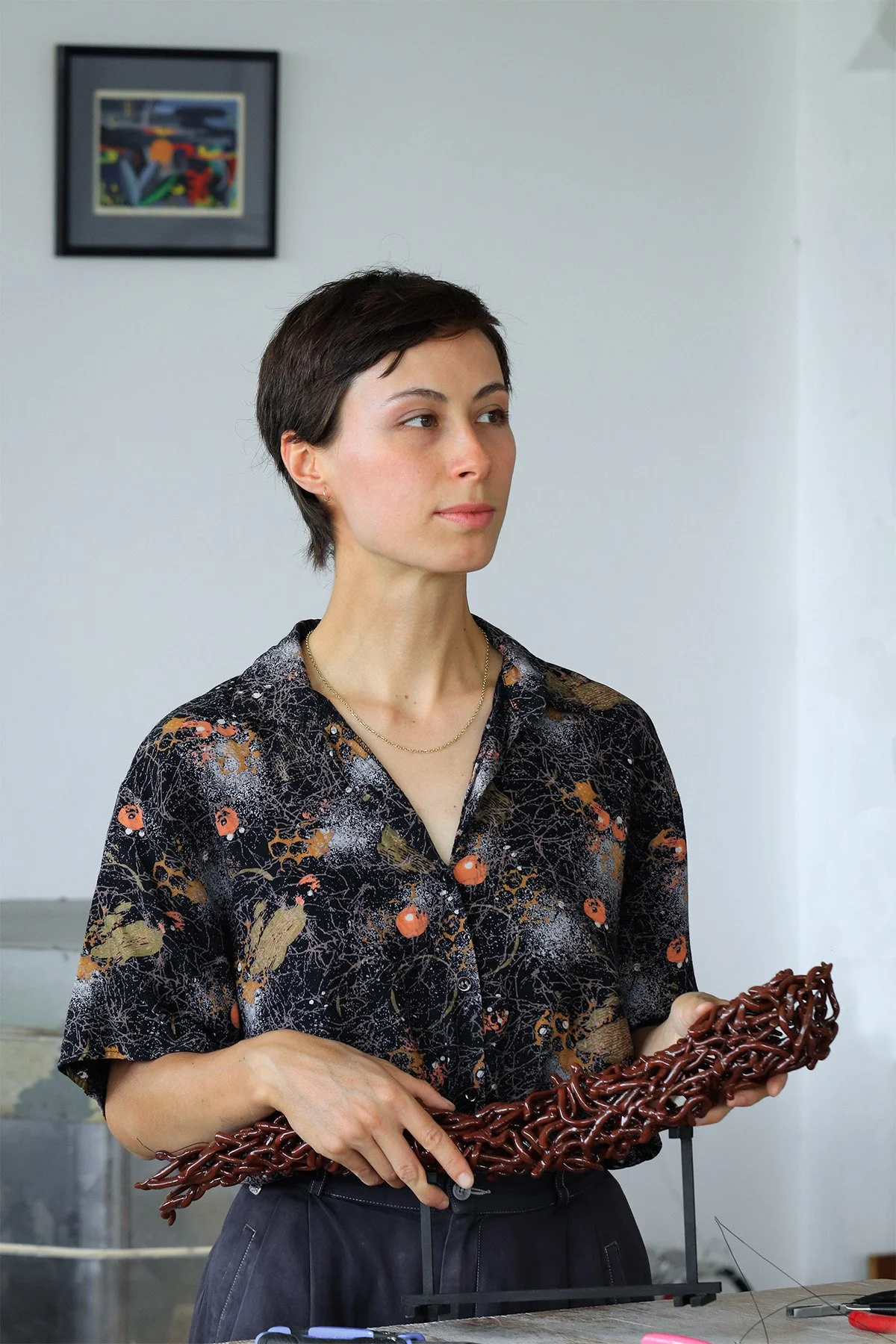
When Laura’s mother and father were married in the UBC Food Services cafeteria, her father’s parents refused to attend the wedding or condone the marriage. For her grandparents, marrying a seven-months-pregnant white woman was unacceptable.
A couple of months after Laura was born, her je4 je4 (paternal grandfather) had a heart attack and was rushed to the hospital. Her father brought three-month-old Laura to meet her stricken grandfather in the ICU. As family stories go, meeting his first grandchild softened his heart and made him reevaluate breaking ties with his son and his chosen family. He made a solid recovery and had a monumental impact on Laura as a child, yet sadly passed at only 67, nine years later.
Educated in Environmental Design, Laura worked professionally as a designer in luxury lighting, with three-meter-high paper wall partitions and renovated portable vacation homes.
In 2021, she shifted her practice from industrial design to the craft and fine arts sector, specializing in ceramics. Her speculative sculpture work explores futures that diverge from the circumstances of current reality and promote equity, celebrate diversity, and perpetuate cultural inheritance.
As a cultural worker, in 2021 she founded atelier clé, a collective ceramics studio, offering membership and classes for all ages and skill levels. As of 2025 it has become a cooperatively governed non-profit. The studio aims to foster meaningful connections through clay, emphasizing inclusivity and dismantling class barriers by sharing the medium in public settings, with new generations and underrepresented communities.
-
Anti-oppression is ongoing, and by necessity an active and adaptive process required to counter and diffuse the groups and individuals that stand to gain power at a cost of others. It is a practice of gauging one's space and role socially, of recognizing oppression as it acts in real time and acting in the most productive way possible to dismantle it. I recognize that I am both implicated in and experience oppression. I can’t speak to the role of the board as a singular ‘role’ but as, ideally as a diversity of ideas that have equal value, both are and amplify the voices of those who are marginalized, oppressed and underrepresented.
-
Inclusion is maintaining and creating space for all peoples to plan, organize, and collaborate toward shared goals.
As a method, at the beginning of meetings, whether informal, one-on-one, committee-based, or involving the center as a whole—it can be seen as a moment to establish a basis for unity and collaboration. All parties should be checked in with, meaning that a sense of what each person is capable of offering and wants from the interaction should be established. In formal settings, this can be a set amount of time offered to each participant. In encounters between individuals, it is a matter of offering the same space that you take up in the conversation and respecting the time and space of the other, which should be asserted as needed. It is about agreeing on a structure. Differences in personal opinions and priorities do not need to cause contention if all parties can agree on a goal to work toward and adhere to the logistics of its achievement.
There are valid circumstances that make it difficult for many people to engage productively toward goals, just as there is no one way to dismantle oppressive systems. As a board member, patience and openness are passive but important ways of being inclusive. There is equal importance in mitigating harm, and there are times when actively limiting the participation of individuals who have demonstrated harmful behaviour is part of the shared responsibility of serving on the board of directors.
-
About 4-8 hours a month, during active months of the centre Sept-July.
Laura Leong
Questions for the candidates
Q. Fabulous Committee: How do you include members of marginalized communities that hold views or whose perspective challenges your opinions or priorities? Define inclusion and provide examples of how you would practice it as a member of the board of directors at articule.
Q. Members’ Committee: Realistically how much time and energy would you have to contribute to articule activities on a weekly or monthly basis?
Q. Writer’s Club: How do you think about making decisions with and on behalf of an organization that you are not implicated in on a day-to-day, operations level?
Q. Programming Committees:
How can we have a programming selection process that respects our basis of unity? More specifically, we invite you to comment on principles such as anonymous submissions, representativeness quotas or more generally on an anti-oppressive approach to programming.
How do you see our virtual platforms contributing to our commitment and expansion of our mandate and basis of unity?
Q. Rainbow Committee: How do you see yourself contributing to articule’s upcoming relocation and transition into a new space? In what ways could you support community engagement and the collective moving process, whether through networks, logistics, transportation, physical labour, or support for staff and volunteers during this transition?
Q. Fundraising Committee: In recent years, articule’s relationship to fundraising and private sector support has changed. As we explore new and sustainable models of income generation, how would you, as a board member, contribute to developing creative and ethical fundraising strategies that align with our values?
Q. Bonus: How can we better connect all of articule’s committees so that our meetings follow a more collective trajectory outside of General Assemblies (GAs)? In other words, how can we feel like we are moving more as a collective than as individual committees outside of GAs?