
la lumière collective

© Photo Credits: Lily Jue Sheng, 2026.
very abstract and a little bit harsh: films & poetry by Lily Jue Sheng — Screening at la lumière collective
Thursday, September 24, 2026 from 6:30 to 8 PM. Free and open to all.
Co=presented by la lumière collective: 7080, Alexandra Street, #506 Montreal, QC H2S 3J5
Please register in advance.
very abstract and a little bit harsh traces the political consciousness of Lily Jue Sheng’s practice through a decade of their experience around unstable cinema economies. The making of Sheng’s Force Majeure and Mercurial Matter coincided with a period of optical printing and their occupation as a small-gauge technician cataloguing late filmmaker and projectionist Stom Sogo’s life work. His untimely passing in 2012 tasked Sheng with handling Sogo’s queer and seminal diary films, which heavily influenced their early artistic process. Sheng’s films will be screening alongside Sogo’s Slow Death, in a timely combination that speaks to the psychic effects of technology, youth, and capitalist violence. Heritage Architecture 建筑遗产 marks Sheng’s shift to landscape cinema following a period of labour organizing. The program will be accompanied by a short poetry reading that draws from class struggles across various fronts and fissures, followed by a Q&A with Steff Huì Cí Ling.
-
The Conditions of Staying
“Urgency” wraps around me every day. Each task at work requires an enforcement of movement, inspired by an expanding belief that the conditions of work are in-emergency. In-urgency. To make enough money, to find safety, to build community, to refuse life this way, but beyond this, to inhabit time and place, better. My body waits for me to act faster.
The enormity of physical, sensorial embodiment crowds me, my progress and any momentum of refusals. I am subdued and also made more complicated by these distractions. They add to my data and I long for the moment of movement where they will integrate into action, outside of the inertia of just surviving experience. Looking around becomes difficult. How do I stay longer, and linger in the act of witnessing, enough to know something, enough to memorialize?
There is something rogue in Lily Jue Sheng's filmmaking. Whether visible in abstracted assemblages of images or encountered through narrator-less landscape documentation, they offer experiences of place without resolving these environments into easily consumable, classifiable, explainable worlds. They look into and around materials and places while remaining irrevocably situated in relation to them. The architecture of a place, of a symbol, of an image; the physical materials of its documentation; the work it took to arrive at that representational result; and the labour conditions under which the project is produced all accumulate inside a highly self-reflexive, materialist, and loving practice of political placemaking.
very abstract and a little bit harsh is an artist cinema and poetry program by Lily Jue Sheng, bringing together four 16mm films made over the course of a decade: Mercurial Matter (2014–2017), Force Majeure (2015–2017), Change 变 (2016–2017), and Heritage Architecture 建筑遗产 (2024), alongside Stom Sogo’s Slow Death (2000), a Super-8-to-digital work. The screening is accompanied by a short reading, followed by a Q&A with writer and researcher Steff Huì Cí Ling.
The program brings different generations of worker-artists into relation: craft alongside labour, intuition alongside analysis, the individual image alongside the repetitive work that produces it. Sensation and materialism do not need to become opposites; one does not need to disappear for the other to become legible. Sheng’s approach to artist cinema is rooted in their position as both artist and worker, and from a Marxist commitment to understanding artistic production through labour, class and solidarity.
They encountered Sogo’s work while working at Anthology Film Archives in New York and describe Sogo’s use of Super 8 as “an intuitive process of re-recording projected material,” where he reshoots Super 8 footage that is projected onto miscellaneous surfaces. At the time, Sheng was making Mercurial Matter (2014–2017), layers of frenetic foliage and organic shapes, and Force Majeure (2015–2017), a rapid-firing eclipse. Change 变 (2016–2017) marks a slight but significant departure toward accelerated and changing symbols of language, stacked through symmetrical palettes of interacting colour. Across these three films, mechanical, pulsing, rhythmic sound accompanies the sequence of kaleidoscopic images. Sogo’s Slow Death (2000), moves through an abstracted dark place of repellent and equally meditative black noise. Change, Mercurial Matter and Force Majeure all use travelling mattes and analogue optical printing. Although Sheng emphasizes that this machinery is very different from the tools Sogo used with Super 8, they see continuity in the degradation of the film image in their respective “machine experiments.”
The film optical printer carries its own labour history. Sheng describes its conventional use in Hollywood special effects as one in which successful technical labour is meant to disappear. Like the camera assistant pulling focus, the worker and the operation become least perceptible when the effect succeeds. Artist filmmakers and film preservationists have long used this same machinery differently. Sheng locates their own experiments within this inversion, using the optical printer to expose what they call “the tensions between materials that are not meant to be seen,” particularly while the film is in motion.
Sheng describes loving Sogo’s work while also encountering a resistance to its demanding sensory qualities in screenings. This friction can itself become productive, something Sheng relates to “a kind of heterogeneous worker’s sabotage: even the desire to leave the viewing space might contain galvanizing energies.
Heritage Architecture 建筑遗产 (2024) marks a material shift toward landscape cinema. A moving camera passes through Taiwanese and Chinese port cities, tilting up and panning right, keeping location sound intact alongside electronic piano and music composed by Masami Tomihisa. Sheng reconstructs what being on the street in these cities might feel like without resolving that experience into didactic explanation or uncomplicated homage. The film depicts an individual passage through material and sensorial structures of cultural identification that are nevertheless bound to communal histories and legacies.
Sheng traces a shift in their practice through experiences in labour movements: a union drive sparked by the movie theatre workers at Anthology, a Chinese restaurant worker picket line just south of the East Village, and rank-and-file organizing led by LGBTQIA+ people and women in higher education. Organizing in Chinatown and the East Village brought questions around race, migration, proximity, and identification into relation with class distinctions, moments of class unity, clashes, and lulls across these neighbourhoods and movements. Looking backward does not mean rewriting Sheng’s earlier films as expressions of a political consciousness that arrived later. Their sensory force can be considered in relation to this history without imposing a linear progression from experimentation to knowledge, identification, and worker-artist consciousness.
To stay with a place does not mean to arrest it, or to finally know it. Sheng's films make room for the unresolved duration of looking: for sensation, material, history and labour to remain present without being made immediately useful as explanation. Staying with these conditions produces another relation to urgency, one that does not require moving faster, but more deliberately.
Urgency is different from speed. Urgency can contain a compressed slowness that is attentive and haunted. Multiple slownesses, together. The slowness of experience against the speed of its material conditions. A critical container. What persists does not become less urgent.
— Pascha Marrow is a visual arts worker, educator, artist and writer based in Montreal.
Program
Force Majeure
2015–2017
5 min. 16mm
Mercurial Matter
2014–2017
6 min. 16mm
Change 变
2016–2017
6 min. 16mm double projection
Heritage Architecture 建筑遗产
2024
9 min. 16mm
Slow Death
2000
Stom Sogo
15 min. Super-8-to-digital
Host
la lumière collective is a collective of local artists and curators who believe in creating cinema and cinematic spaces that foster both artistic and human connections. la lumière collective was founded in 2016 by Emma Roufs, Sonya Stefan, and Benjamin R. Taylor. It is currently co-directed by Emma Roufs and Benjamin R. Taylor, with Noa Blanche Beschorner and Samuel Terry Pitre serving as general coordinators.
Artist
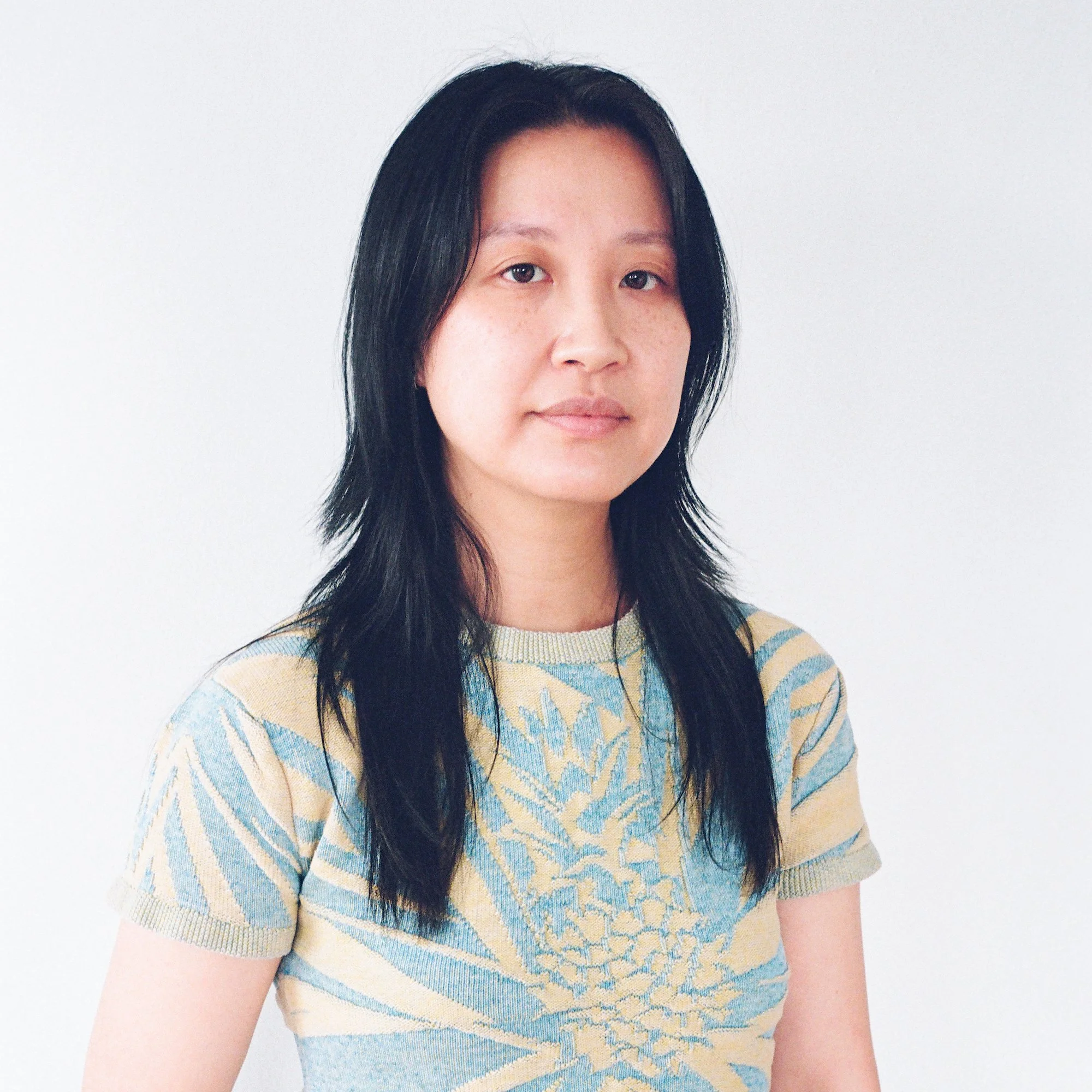
Lily Jue Sheng is an artist-filmmaker and cinema worker working across the moving image, collage, and poetry. They have screened or read at Anthology Film Archives, The Cinematheque, the Emily Harvey Foundation, Mono No Aware, and The Poetry Project. Recent film festival presentations include Light Field Film Festival, Beijing International Short Film Festival, Winnipeg Underground Film Festival, International Film Festival Rotterdam, True/False Film Fest, and Kabayitos Microcinema. They have received awards from Creatives Rebuild NY, Foundation for Contemporary Arts, the Jerome Foundation, the Anderson Center at Tower View, and various local arts councils. Their work develops from places and paradigms relative to being a neuro-atypical minority settler (b. Shanghai, China) in labor struggles on unceded Lenape lands where they grew up and are based (New Jersey and New York).

Moderator
Steff Huì Cí Ling 林惠慈 is a labour researcher and art worker on unceded territories. She is an film programmer for DIM Cinema series at The Cinematheque and was the co-editor of a special issue on the 50th Anniversary of Harry Braverman’s Labor and Monopoly Capital for New Proposals: Journal of Marxism and Interdisciplinary Inquiry.
Accessibility
For any questions or requests concerning accessibility to the event or our gallery space, please contact Samuel via email or by phone at 514-842-9686. For general accessibility information, please visit our dedicated page. We are committed to creating an inclusive and welcoming space for all.
Considering ongoing COVID-19 and flu transmissions, please note that mask wearing is strongly recommended during events.